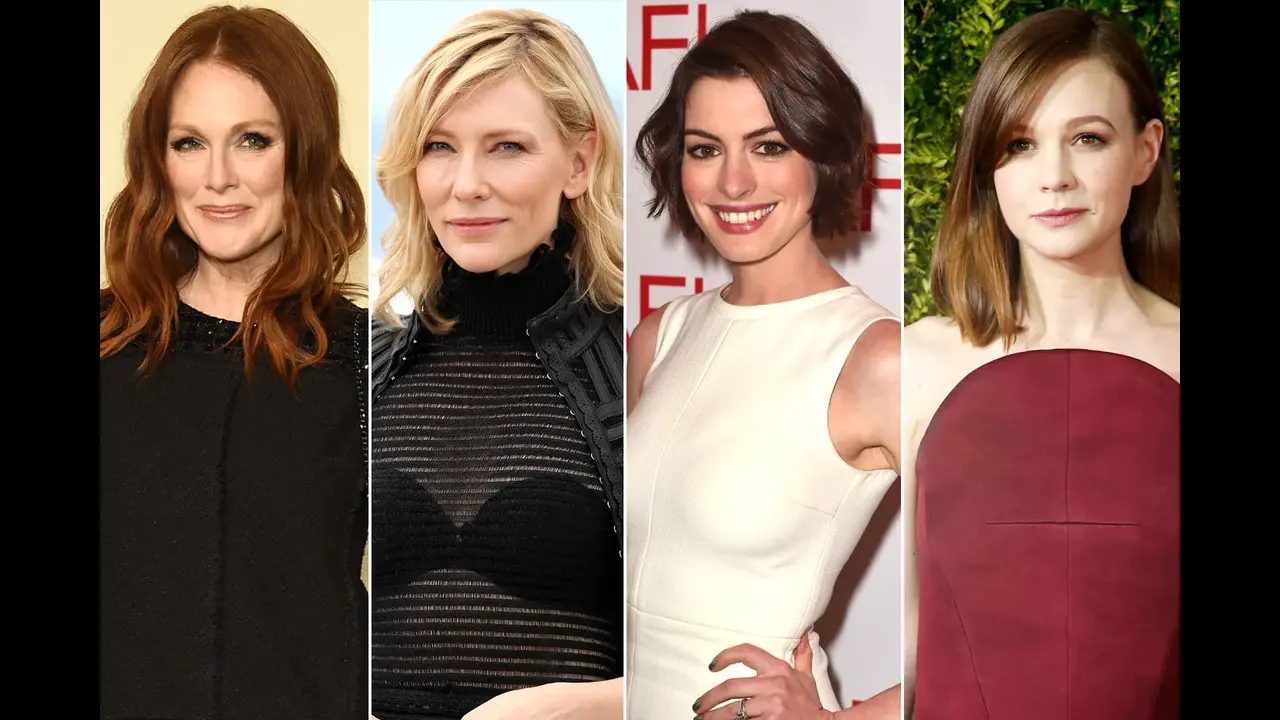
In the grand tapestry of modern cinema, few threads shimmer quite as brightly as those woven by Cate Blanchett and Anne Hathaway. These two actresses, hailing from different corners of the globe and carving their paths through distinct generational lenses, have nevertheless arrived at a shared summit of critical and popular acclaim. To discuss one is inevitably to invite a comparison with the other, not because they are similar in their approach, but precisely because they represent two profoundly different, yet equally valid, philosophies of acting. Blanchett, the Australian chameleon, often seems to dissolve into her roles with an alchemical magic that renders her unrecognizable, while Hathaway, the American stalwart, brings a breathtaking emotional transparency and technical precision that feel both classical and utterly contemporary. Their careers, when viewed side by side, offer a masterclass in the art of performance, revealing the vast spectrum of possibilities within the craft of acting.
The conversation surrounding Cate Blanchett and Anne Hathaway is not merely a parlor game of “who is better,” for such a question misses the point entirely. Instead, it is a fascinating exploration of how two supremely gifted artists can interpret the very concept of stardom and performance in wildly divergent ways. They have both tackled Shakespeare and blockbusters, independent darlings and massive franchises, yet each has left an indelible and distinct mark on every project they touch. Blanchett possesses an otherworldly quality, a glacial intensity that can be both terrifying and hypnotic, while Hathaway radiates a warm, accessible intelligence that makes her characters’ joys and sorrows feel deeply personal. This article aims to deconstruct their individual geniuses, explore the moments their paths have crossed, and ultimately celebrate the rich, diverse landscape of acting they collectively represent.
The Architect and the Interpreter: Divergent Approaches to Character
To truly appreciate the artistry of Cate Blanchett and Anne Hathaway, one must first understand the fundamental philosophical differences in how they approach the construction of a character. Cate Blanchett operates as an architect, meticulously designing her performances from the outside in. She is renowned for her focus on the physicality of a role, the way a character walks, speaks, and holds their posture, believing that these external markers are the keys to unlocking the internal psychology. This is a deeply classical approach, one that harkens back to the great stage actors of the past. She often speaks of finding the character’s “voice” first, and from that vocal cadence, the entire persona emerges. In her Oscar-winning turn as Katharine Hepburn in “The Aviator,” she didn’t just mimic the iconic actress; she deconstructed her speech patterns, her clipped New England accent, and her gawky, aristocratic bearing to create a performance that felt like a spiritual possession rather than a mere impression. This architectural methodology allows her to inhabit spaces that feel entirely alien to her own personality, making her a vessel for characters that range from the ethereal Galadriel to the deeply flawed and monstrous Jasmine in “Blue Jasmine.” She builds these characters from the ground up, stone by stone, until they stand as fully realized, breathing structures that are wholly independent of Cate Blanchett and Anne Hathaway the person.
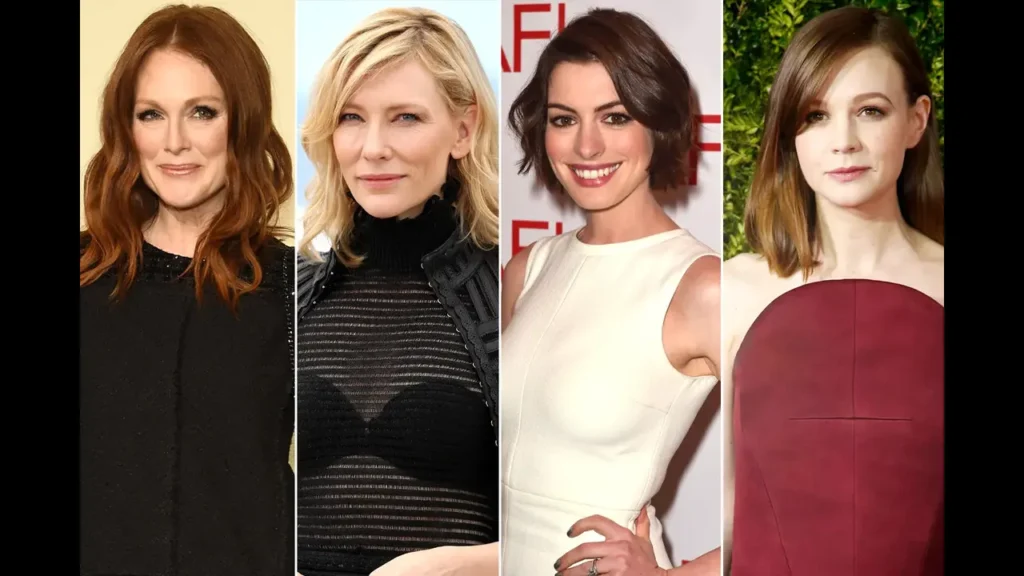
Conversely, Anne Hathaway approaches her craft from the inside out, more akin to an interpreter who channels a character’s emotional truth through her own lived experiences and immense emotional reservoir. While she is certainly capable of physical transformation, as seen in her drastic weight loss and gaunt appearance for “Les Misérables,” her primary tool is her profound emotional availability. Hathaway delves deep into the psyche of her characters, finding the universal human emotions—grief, joy, anxiety, ambition—that connect her to the role. Her performances are often characterized by a raw, palpable vulnerability that makes the audience feel as though they are witnessing a genuine emotional catharsis. Her work in “Rachel Getting Married” is a prime example, where her portrayal of Kym, a young woman fresh out of rehab and grappling with a family tragedy, was so raw and unflinching that it felt almost like a documentary. She doesn’t build a character from the outside as much as she finds the character within herself, amplifying and refining those feelings to serve the story. This approach makes her characters incredibly relatable, even when they are in extraordinary circumstances. It is a more modern, introspective method, one that relies heavily on her own emotional intelligence and her capacity to translate complex psychological states into tangible, heart-wrenching moments on screen. Where Cate Blanchett and Anne Hathaway often obscures herself behind the character, Hathaway invites you to see her struggle, to witness the process of creation, and it is this transparency that makes her so compelling.
The Art of the Chameleon: Cate Cate Blanchett and Anne Hathaway Transformative Power
When one speaks of Cate Blanchett, the word “chameleon” inevitably arises, and for good reason. It is not just that she disappears into her roles; it is that she seems to actively reject the very notion of a fixed “Cate Blanchett and Anne Hathaway” identity. Each performance is a complete reinvention, a total immersion into a world that leaves no trace of the actress behind. This is a rare and precious gift, a kind of cinematic alchemy that allows her to be almost terrifyingly convincing as a man—as Bob Dylan in “I’m Not There”—and then, in the very next film, embody the ethereal, otherworldly beauty of an Elven queen. This transformative power is not a gimmick but a deeply serious artistic commitment. She has spoken about the joy of “losing” herself in a role, of using the craft as a means of escaping the confines of her own persona. This ability is rooted in a classical stage training that emphasized the supremacy of the character over the actor. She approaches each project with a scholar’s dedication, researching and absorbing every detail to ensure that her portrayal is not just a performance but a veritable act of resurrection. Whether she is playing the brittle, anxious socialite in “Carol” or the pragmatic, ruthless villain in “Thor: Ragnarok,” she imbues each character with a distinct, fully-formed internal logic that captivates the audience.
This dedication to transformation extends beyond just her physical appearance and into her vocal and psychological landscapes. Cate Blanchett and Anne Hathaway voice is one of her most powerful instruments, and she wields it with extraordinary precision. She can modulate her accent, tone, and cadence to such a degree that she can be mistaken for a native of almost any English-speaking country. In “The Aviator,” she captured the breathy, rapid-fire delivery of Katharine Hepburn; in “Notes on a Scandal,” she adopted a clipped, brittle British accent that perfectly mirrored her character’s repressed desperation; and in “Blue Jasmine,” she delivered a masterclass in dialect work, her character’s speech slowly unspooling from a chic, sophisticated drawl to the ragged, panicked tones of a woman on the verge of a breakdown. This vocal malleability is just one facet of her larger commitment to the architecture of performance. She builds her characters with such intricate detail that they feel as though they have a life and history that extends far beyond the confines of the film’s runtime. It is this holistic, all-consuming approach that elevates her performances to the realm of high art, making her one of the most respected and formidable actresses of her generation. She is not just playing a part; she is creating a world, and we are privileged to be invited in.
The Heart on a Sleeve: Anne Cate Blanchett and Anne Hathaway Emotional Transparency
In stark contrast to Cate Blanchett and Anne Hathaway architectural mystique, Anne Hathaway’s brilliance lies in her profound and often breathtaking emotional transparency. She is an actress who wears her heart on her sleeve, and in doing so, she invites the audience to share in the most intimate and vulnerable moments of her characters’ lives. This is not to say that her performances are simplistic or one-note; on the contrary, the complexity of her work stems from her ability to navigate a labyrinth of conflicting emotions with raw honesty. Hathaway is a master of the tear, but it is never a cheap trick. When she cries on screen, you feel the weight of a lifetime of sorrow, regret, or joy compressed into a single, crystalline moment. This ability to access such deep, authentic emotion is a skill that sets her apart in an industry often obsessed with cool detachment. It is this quality that made her performance in “Les Misérables” so devastatingly powerful; her rendition of “I Dreamed a Dream” was not just a song but a full-blown emotional and physical breakdown, a raw and unfiltered outpouring of grief that left audiences breathless and earned her an Academy Award Cate Blanchett and Anne Hathaway
However, to reduce Hathaway’s talent to her ability to cry would be a profound disservice to her range. Her emotional transparency is not just about sorrow; it is about the full spectrum of human feeling. In “The Devil Wears Prada,” she brilliantly captured the evolution of Andy Sachs from a naive, awkward outsider to a confident, if slightly jaded, young professional. Her performance was rooted in a relatable, everywoman quality that made Andy’s journey feel like our own. We felt her anxiety, her humiliation, and ultimately, her triumph. In films like “Ocean’s 8,” she showcased a delightful comedic flair, playing a narcissistic, self-absorbed actress with such infectious glee that it was impossible not to be charmed. This comedic timing is another facet of her emotional intelligence; she understands that humor often arises from a place of deep-seated insecurity or a clash between expectation and reality. Her performance in that film was a masterclass in letting the audience in on the joke, creating a character who was both ridiculous and oddly endearing. Hathaway’s strength lies in this ability to be so emotionally porous, to let the audience see the gears turning behind her eyes. She makes the grand gesture feel personal, and the subtle twitch of an eyebrow feel monumental, forging an empathetic connection that is the bedrock of her enduring popularity Cate Blanchett and Anne Hathaway
The Blockbuster and the Art House: Navigating the Hollywood Landscape
Both Cate Blanchett and Anne Hathaway have navigated the treacherous waters of Hollywood with remarkable skill and intelligence, successfully balancing massive blockbuster franchises with critically acclaimed independent and prestige films. This duality is a hallmark of a truly great actor in the modern era, a sign that they are not merely interested in fame or fortune, but in the art of acting itself. Cate Blanchett and Anne Hathaway, for instance, has lent her immense gravitas and ethereal presence to the “Lord of the Rings” and “The Hobbit” trilogies as Galadriel, a role that introduced her to a massive global audience. She brought a weight and otherworldly wisdom to the part that elevated the fantasy genre to something resembling high literature. She has also dabbled in the Marvel Cinematic Universe as Hela in “Thor: Ragnarok,” embracing the camp and grandeur of the role with a gleeful menace that was both terrifying and hilarious. These roles, however, have never defined her; they are simply fascinating detours in a career that is otherwise dedicated to more challenging, character-driven work. She seamlessly moves from these giant productions to starring in art-house films like “Carol” or “Tár,” proving that her talent is not diminished by the scale of the production but, in fact, enhances whatever world she enters.
Anne Hathaway’s blockbuster career has been equally impressive, though it has taken a slightly different trajectory. She became a household name as the princess Mia Thermopolis in “The Princess Diaries,” a role that established her as a beloved and relatable young actress. She then transitioned to high-profile genre films like “The Dark Knight Rises,” where she played a surprisingly grounded and emotionally complex Selina Kyle, and the heist film “Ocean’s 8.” More recently, she has appeared in Christopher Nolan’s “Interstellar,” a cerebral sci-fi epic that demanded a performance of profound emotional depth. Like Cate Blanchett and Anne Hathaway, Hathaway uses her blockbuster roles as a platform to reach a wider audience, but she consistently chooses projects within that sphere that allow her to showcase her range. Her Catwoman was not just a sexy sidekick; she was a survivor, a woman with a complicated moral code and a desperate need for connection. This ability to find the human core in even the most fantastical of stories is what makes her such a valuable asset to any production. Both actresses have understood that a career built solely on prestige films is as limiting as one built solely on blockbusters. By deftly balancing the two, they have maintained their artistic credibility while ensuring their financial security and global fame, a trick that few actors manage to pull off with such grace.
The Queen and the Princess: A Study in On-Screen Personas Cate Blanchett and Anne Hathaway
There is a fascinating dichotomy in the public personas and the types of roles that Cate Blanchett and Anne Hathaway have come to embody. Cate Blanchett and Anne Hathaway, with her sharp cheekbones, majestic bearing, and often serious, unapproachable characters, has cultivated an image of regal authority. She is the queen, the high priestess, the woman of immense power and intellect. This is not a caricature she has created, but an aura that naturally emanates from her work. Her roles often place her in positions of authority or immense internal power, even when that power is destructive. She is the tyrannical queen in “Elizabeth,” the formidable ballet impresario in “Tár,” the powerful, manipulative matriarch in “Blue Jasmine.” She commands the screen not just with her talent, but with an undeniable presence that suggests she is always the most intelligent person in the room. This persona has made her a symbol of untouchable artistic achievement, an actor who is feared and revered in equal measure. It is a persona that demands respect and allows her to play characters that are often unlikeable, complex, and morally ambiguous, because the audience trusts her intelligence to guide them through the narrative.
Anne Hathaway, on the other hand, has often been cast in roles that, at least initially, positioned her as the princess or the girl-next-door. From her breakout role in “The Princess Diaries” to her charming turn in “Ella Enchanted,” she was America’s sweetheart, a beautiful and accessible figure of aspirational warmth. Even as she has taken on more mature and complex roles, there is a residual sense of that innate likability that permeates her work. She is often the character we root for, the one who is fighting against the odds or trying to make sense of a chaotic world. Her persona is one of empathetic resilience, a woman who feels deeply and is not afraid to show it. This has allowed her to be the emotional anchor in a wide variety of films, from the romantic comedy of “The Princess Diaries” to the heartbreaking drama of “One Day.” She is the princess who has grown into a wise and deeply feeling queen, but she has never lost that touch of relatability that first endeared her to audiences. This difference in persona is not a limitation for either actress; rather, it is a reflection of their unique artistic sensibilities. Cate Blanchett and Anne Hathaway is the oracle, the authoritative voice of reason or chaos; Hathaway is the confidante, the friend who is about to tell you a devastatingly honest story about her own heartbreak. Both are compelling, but they are compelling in fundamentally different ways.
Their Theatrical Roots: The Foundation of Greatness
Before they were Hollywood icons, both Cate Blanchett and Anne Hathaway honed their formidable skills on the stage, and this theatrical foundation is a crucial component of their success. For Cate Blanchett and Anne Hathaway, the theater is not just a starting point but a lifelong passion and a vital part of her artistic identity. She began her career with the Sydney Theatre Company and has returned to it time and again, even serving as its co-artistic director alongside her husband, Andrew Upton, for several years. Her stage work is legendary; she has tackled some of the most demanding roles in the dramatic canon, from Hedda Gabler to Blanche DuBois in “A Streetcar Named Desire” to Richard II in a gender-bending production. This rigorous classical training has instilled in her a discipline and a fearlessness that is evident in her film work. Theater demands stamina, precision, and the ability to project emotion and intention to the back of a room without the aid of a camera. It teaches an actor to command space, to be present in every moment, and to find a character’s inner life through their physicality and voice. Cate Blanchett and Anne Hathaway architectural approach to acting is a direct result of her theatrical background; she builds her characters for the stage, and then brilliantly scales them for the intimacy of the camera.
Anne Hathaway also has a deep and abiding love for the theater, which has played a crucial role in her development as an actress. She has performed in several acclaimed stage productions, including a celebrated run in a Public Theater production of “Twelfth Night” in New York’s Central Park, where she played Viola. This experience, performing Shakespeare in front of thousands of people, is a trial by fire that forges a unique kind of resilience. Hathaway has spoken about the terrifying and liberating nature of live performance, where there is no safety net, and every choice must be made in the moment. This immediacy of theater has informed her film acting, giving her a boldness and a willingness to take risks. It has also contributed to her emotional transparency; on stage, you must feel the emotion in your bones to communicate it effectively. Her stage work has allowed her to explore classical texts and characters, adding another layer of depth to her film performances. While she may not be as synonymous with the stage as Cate Blanchett and Anne Hathaway, her theatrical forays are a testament to her commitment to the craft. Both actresses understand that acting is a muscle that must be constantly exercised in all its forms, and their continued dedication to the theater is a clear signal of their reverence for the art form and their desire to constantly challenge themselves.
The Fashion Icons: Their Influence on Style and Red Carpets
It is impossible to discuss Cate Blanchett and Anne Hathaway without acknowledging their status as two of the most influential and captivating figures on the red carpet and in the world of fashion. They are not merely celebrities who wear clothes; they are genuine fashion icons who use their style as a powerful extension of their artistry. Cate Blanchett and Anne Hathaway is the undisputed queen of high fashion, a muse to designers like Giorgio Armani and the late Karl Lagerfeld. Her style is architectural, avant-garde, and often androgynous. She is not afraid to wear a pantsuit, a dramatic cape, or a piece of sculptural art that challenges conventional notions of red-carpet glamour. Her approach to fashion mirrors her approach to acting: it is transformative, intellectual, and always surprising. She exudes a kind of effortless confidence that makes even the most daring of outfits look regal and impeccable. She treats the red carpet as a stage, and her fashion choices are as much a part of her performance as any film role. From her luminous Armani gowns to her daring, gender-fluid tuxedos, she consistently pushes the boundaries of what is expected, making her a constant source of inspiration for designers and fashion enthusiasts alike. She doesn’t follow trends; she sets them, and her influence is palpable in the increasing acceptance of androgynous, bold, and architecturally complex fashion on the red carpet.
Anne Hathaway, in contrast, embodies a more classic, yet equally powerful, style that has evolved into something truly magnificent over the years. While she initially embraced a more traditional princess-like style, she has transformed into a sophisticated and daring fashion icon in her own right, particularly in her collaborations with Valentino. Her style is characterized by a dramatic, feminine elegance that is both timeless and contemporary. She Cate Blanchett and Anne Hathaway the ability to wear a sweeping, romantic gown with the same ease as she wears a sleek, modern pantsuit. Her fashion journey has been one of experimentation and growth, and she is now considered one of the most reliable and thrilling presences on the red carpet. One of the most iconic moments in recent fashion history is her role as a co-chair of the Met Gala in 2024, where she appeared in a breathtaking, custom Maison Margiela Artisanal gown by John Galliano, a look that was both a tribute to fashion history and a bold statement of her own sartorial evolution. Hathaway’s fashion sense is a powerful reflection of her journey as an actress: it is polished, versatile, and deeply emotional. She understands that what she wears is a form of storytelling, and she uses it to project confidence Cate Blanchett and Anne Hathaway grace, and an infectious joy that makes her so beloved. Both women are not just fashionistas; they are artists who use clothing to express their identities, and their influence on the world of style is undeniable and enduring.
The Moment They Shared: The 2009 Academy Awards Cate Blanchett and Anne Hathaway
One of the most delightful and memorable intersections of their careers occurred at the 2009 Academy Awards, where the two actresses shared the stage as co-presenters. This moment was a fascinating microcosm of their dynamic; a perfect encapsulation of their distinct but equally enchanting personas. In a hilarious and self-aware skit, they performed a musical number poking fun at the movies that were nominated for Best Supporting Actress that year. Hathaway, in a sweet and earnest voice, sang a heartfelt song about the “lovable” performances, while Blanchett, with a deadpan expression and theatrical exasperation, sang about the “manic” and “crazy” ones. The contrast was perfect: Hathaway, the radiant ingénue, and Cate Blanchett and Anne Hathaway, the wry, sophisticated professional. The bit was a massive hit, showcasing not only their considerable comedic and musical talents but also their willingness to laugh at the very industry that was feting them. It was a moment of pure, unadulterated charm that highlighted their individual strengths and their ability to complement each other on stage. It was a rare glimpse of the two titans sharing the spotlight in a way that was collaborative, funny, and mutually respectful.
This iconic moment was more than just a great piece of television; it was a symbolic passing of the torch and a celebration of female talent in an industry that was still heavily male-dominated. It showed two women at the top of their game, not competing with each other but celebrating the art of performance itself. Hathaway’s earnestness and Cate Blanchett and Anne Hathaway sardonic wit were perfectly balanced, creating a scene that was both hilarious and oddly moving. It served as a reminder that these two actresses, despite their different styles, are united by a profound love for their craft and a shared understanding of the absurdity of the awards season circus. The 2009 Oscars moment remains a beloved piece of Hollywood lore, a testament to their comedic timing and a perfect example of how their divergent energies can create a magical synergy. For fans of both actresses, it was a dream come true to see them share the stage, and it only fueled the desire to see them co-star in a film together, a collaboration that would undoubtedly be a cinematic event. This brief but brilliant encounter proved that while they are often placed on opposing sides of a comparison, they are, in fact, two sides of the same brilliant coin.
Directing Dreams: Their Work Behind the Camera
Beyond their formidable talents in front of the camera, both Cate Blanchett and Anne Hathaway have expressed a deep interest in and have taken steps toward the other side of the filmmaking process, proving that their creative vision extends beyond acting. Cate Blanchett and Anne Hathaway, while she hasn’t yet directed a feature film, has been highly influential as a producer and a creative force behind the scenes. She co-founded the production company Dirty Films with her husband, through which she has produced and starred in several critically acclaimed films, including “Carol,” “Manifesto,” and “Tár.” Her role as a producer is not merely a vanity title; she is deeply involved in the creative and logistical aspects of bringing a story to the screen. Her work as the co-artistic director of the Sydney Theatre Company also gave her invaluable experience in the executive side of the arts, overseeing seasons, commissioning new work, and guiding the artistic vision of a major institution. This experience has given her a profound understanding of the collaborative nature of filmmaking and a keen eye for talent and story. She is a powerful advocate for female-driven narratives and projects that challenge the status quo, using her influence and production company to bring unique and important stories to the forefront.
Anne Hathaway, too, has embarked on a journey into production and is beginning to explore the director’s chair. She has served as a producer on several of her films, including “The Last Thing He Wanted” and “The Idea of You,” demonstrating a keen interest in the business and storytelling aspects of filmmaking. She has also directed music videos, including one for the band The Dirty Projectors, and has spoken openly about her desire to direct a feature film. This is a natural progression for an actress of her intelligence and ambition. Directing requires a holistic understanding of the filmmaking process, from the script to the final cut, and Hathaway has been meticulously preparing for this next chapter in her career. She has spoken about learning from the directors she has worked with, observing their techniques and their management of the set. Her directorial debut, “The Idea of You,” which she also produced, saw her take a more active role in shaping the film’s narrative and tone. While her directorial career is still in its infancy, her passion for the craft and her desire to tell stories from a new perspective are undeniable. Both Cate Blanchett and Hathaway represent a modern breed of actress who are not content to simply be performers but are determined to be architects of their own careers and storytellers in their own rightCate Blanchett and Anne Hathaway
Their Cultural Impact and Legacy
The cultural impact of Cate Blanchett and Anne Hathaway extends far beyond the silver screen, influencing conversations about feminism, power, resilience, and the very definition of success in the public eye. Cate Blanchett and Anne Hathaway has become a powerful symbol of intellectual authority and artistic integrity. She is frequently cited as a role model for young women, not just for her acting ability, but for her unwavering commitment to her craft and her refusal to be pigeonholed or diminished. She speaks with intelligence and thoughtfulness on issues of gender equality in the industry, often calling out the systemic biases that women face. She has used her platform to champion emerging filmmakers and to advocate for more complex and diverse roles for women. Her legacy will undoubtedly be that of a fearless artist who never compromised her vision, who treated her work as a serious intellectual pursuit, and who expanded the possibilities of what a female actor can achieve. She has shown that it is possible to be both a global superstar and a deeply respected artist, a balance that many aspire to but few achieve with such grace and integrity.
Anne Hathaway’s cultural impact is equally profound, though it manifests in a different, more empathetic way. She has become a symbol of resilience, grace under pressure, and the importance of authenticity. Her career has been a public journey, from the bright-eyed princess to the mature, confident woman she is today. She has navigated immense public scrutiny and a period of intense online backlash with remarkable poise, emerging from it stronger and more self-assured. Her journey has resonated with millions of people, particularly women, who see in her a reflection of their own struggles with public perception and the pressure to conform. She is a vocal advocate for LGBTQ+ rights, gender equality, and mental health awareness, using her platform to speak out on issues that matter. Her legacy will be that of a woman who refused to let adversity define her, who wore her heart on her sleeve and inspired others to do the same. She has proven that kindness and vulnerability are not weaknesses but incredible strengths. Together, Cate Blanchett and Anne Hathaway represent two powerful archetypes of modern womanhood: the formidable, untouchable intellectual and the resilient, open-hearted survivor. They have both used their immense platforms to advocate for positive change and to inspire a new generation of artists and dreamers.
Why We Can’t Stop Comparing Them
Ultimately, the enduring fascination with comparing Cate Blanchett and Anne Hathaway stems from a deep-seated human desire to categorize and understand greatness. It is a way of appreciating their distinct talents by examining them in relation to each other. They are two of the most successful and critically acclaimed actresses of their generation, and their careers have run on parallel tracks for over two decades. The comparisons are inevitable, but they are not a zero-sum game. By analyzing their different approaches, we gain a deeper appreciation for the vast spectrum of possibilities within the art of acting itself. Cate Blanchett and Anne Hathaway represents the mystique of the artist, the intellectual powerhouse who builds worlds from the outside in. Hathaway embodies the vulnerability of the artist, the emotional conduit who invites us into her characters’ internal lives from the inside out. Both are valid, both are brilliant, and both are necessary for a rich and diverse cinematic landscape.
The conversation is not about crowning one as superior; it is about celebrating the richness of their individual gifts. It is about marveling at how two people can approach the same craft with such different methodologies and both achieve extraordinary, award-winning results. Their careers serve as a beautiful illustration of the fact that there is no single, correct way to act. There is the way of the architect and the way of the interpreter, the way of the chameleon and the way of the open book. We compare them because they are two of the best examples of what acting can be, and by holding them up to the light, we see the brilliant, multifaceted prism of their talents. They are a testament to the power of female artistry, two towering figures who have enriched our culture with their unforgettable performances and continue to push the boundaries of their craft.
The Shared Traits of Titans
Despite their apparent differences, a closer look reveals that Cate Blanchett and Anne Hathaway share several crucial traits that are the bedrock of their phenomenal success. They are both remarkably fearless in their choice of roles, never shying away from characters that are unlikeable, complicated, or emotionally demanding. They have consistently chosen projects that challenge them, that allow them to stretch their abilities and defy audience expectations. Cate Blanchett and Anne Hathaway has played a woman slowly losing her grip on reality in “Blue Jasmine,” and a tyrannical villain in “Thor: Ragnarok,” while Hathaway has portrayed a drug-addicted ex-convict in “Rachel Getting Married” and a woman trapped in an abusive relationship in “Colossal.” This willingness to embrace the dark, the difficult, and the ambiguous is a hallmark of actors who are not interested in protecting a pristine public image but in telling the truth through their work. They understand that the most compelling characters are often the most flawed, and they have built their careers on bringing these complex individuals to life with nuance and compassion.
Furthermore, both actresses are renowned for their intense work ethic and meticulous preparation. There is a reason they are considered among the best in the business; they are not relying on natural talent alone but are dedicated to the relentless pursuit of excellence. Cate Blanchett and Anne Hathaway research for her roles is legendary, often delving into obscure details to build a complete and coherent backstory for her characters. Hathaway is equally committed, known for putting herself through rigorous physical and emotional transformations. She lived on a diet of water and thin rice cakes for weeks to achieve the gaunt look of Fantine in “Les Misérables,” and she spent months training in martial arts and weaponry for her role in “The Dark Knight Rises.” This dedication is what sets them apart from the merely talented; it is the fusion of immense natural ability with an unwavering commitment to the craft that elevates them to the status of true artists. They are both consummate professionals who lead by example, demonstrating that greatness is not an accident but the result of hard work, discipline, and a profound respect for the art of storytelling.
What a Future Collaboration Could Look Like
One of the most tantalizing prospects for cinephiles around the world is the idea of a film that stars both Cate Blanchett and Anne Hathaway in substantial, leading roles. Their brief but electric collaboration at the Oscars has left audiences hungry for more, and the thought of them sharing the screen in a feature film is a dream that feels both inevitable and endlessly exciting. Given their contrasting styles, the possibilities are incredibly rich. Imagine them as rival power players in a high-stakes corporate drama, with Blanchett’s icy, calculating demeanor clashing against Hathaway’s emotionally charged, principled intensity. Or picture them as estranged sisters reunited after a family tragedy, with their different approaches to processing grief creating a powerful and moving dramatic dynamic. A period piece would also be a perfect vehicle for their talents, allowing Cate Blanchett and Anne Hathaway to embody a formidable historical figure while Hathaway brings her emotional depth to a character caught in the web of history.
The potential for their on-screen chemistry is immense. They are not actors who would compete for the spotlight; rather, their distinct energies would create a compelling push-and-pull that would elevate the material. A director with a strong vision, perhaps someone like Guillermo del Toro or Sofia Coppola, could harness their unique talents to create something truly special. The film could be a dark thriller, a sweeping epic, or an intimate character study; the genre matters less than the opportunity to watch these two masters of their craft engage in a dramatic dialogue. Such a collaboration would not only be a cinematic event but also a fascinating study in contrasting acting methodologies. Would Cate Blanchett and Anne Hathaway architectural precision create a fortress that Hathaway’s emotional honesty must breach, or would they find a way to meet in the middle, creating a new, hybrid style of performance? It is a question that we desperately want to see answered on the big screen, and one can only hope that the right project will bring these two remarkable women together for the cinematic feast we have all been waiting for.
A Conclusion: The Unfading Luster of Two Icons
In the final analysis, the careers of Cate Blanchett and Anne Hathaway stand as a testament to the enduring power and versatility of great acting. They are two extraordinary women who have, through immense talent, relentless dedication, and an unwavering commitment to their craft, carved out unique and indelible places in the history of cinema. To place them in competition is to misunderstand the nature of their genius; they are not rivals but two different constellations in the same magnificent sky, each shining with its own unique and brilliant light. Cate Blanchett and Anne Hathaway luminescence is one of intellectual fire, a cool, distant, and awe-inspiring star that demands our respect and contemplation. Anne Hathaway’s glow is one of radiant warmth, a closer, more intimate presence that invites us to share in her emotional journey. Together, they define the extraordinary breadth of the actor’s art, proving that there is no single path to excellence.
As they continue to evolve and explore new avenues in their careers, their influence will only grow. They are role models for aspiring actors and a joy for audiences around the world. They have shown us that it is possible to be both a superstar and a serious artist, to command the screen in a blockbuster and disappear into a character in a tiny independent film. Their work is a gift that will be studied and admired for generations. So, the next time you find yourself contemplating the question of Cate Blanchett and Anne Hathaway or Anne Hathaway, take a moment to appreciate that you are not being asked to choose. You are being offered a dual perspective on greatness. The cinematic world is richer, more beautiful,
and more fascinating for having both of these iconic actresses in it. Their stars will continue to rise, and we will be here, in the audience, grateful for every moment of brilliance they bestow upon us.
Mary Ryan Ravenel: The Quiet Force Behind Charleston’s Most Talked-About Dynasty