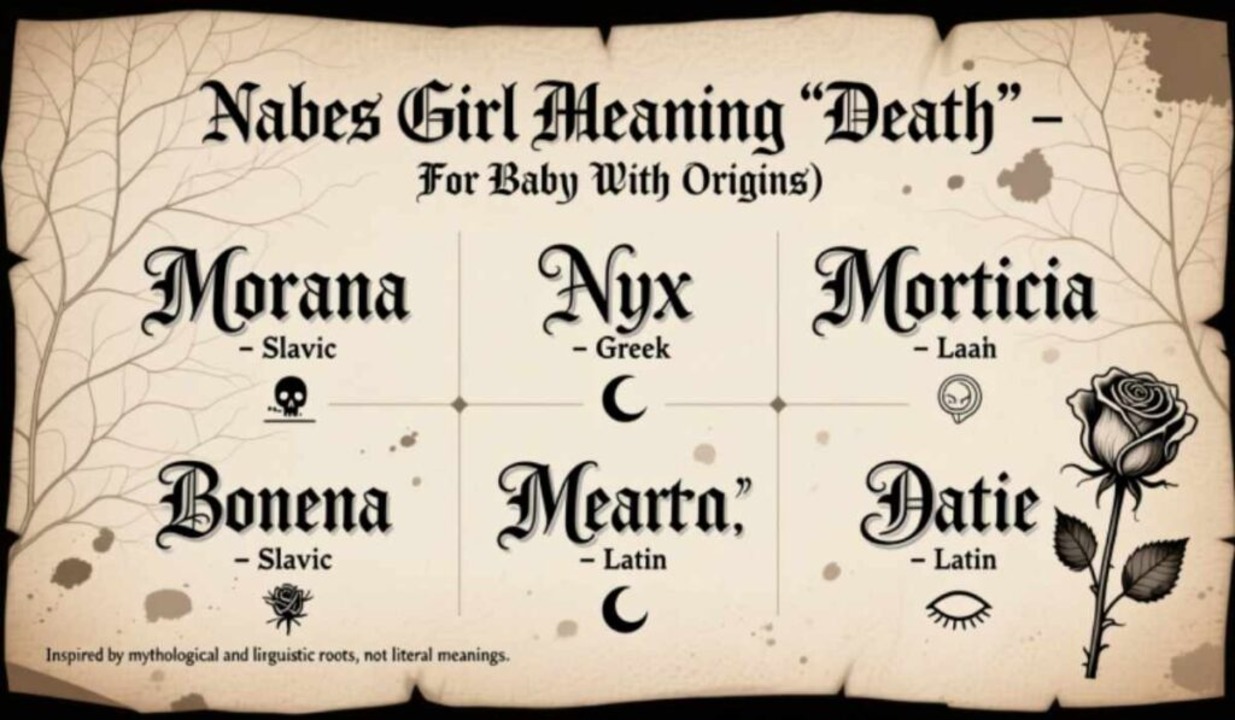
There is a certain magnetism to the darker side of Last Names That Mean Death We are often fascinated by words that brush against the edges of mortality, and nowhere is this more potent than in the names we carry. Surnames are the echoes of our ancestors, passed down through generations, and when they are touched by the shadow of death, they carry a weight that is both eerie and profoundly poetic. Choosing a surname connected to this theme—whether for a character in a story, a gamer persona, or simply out of a love for the macabre—is about embracing a narrative that has been with humanity since the beginning. It is a way to acknowledge the inevitable, to wrap it in mystery, and to give it a name.
The Etymology of Mortality in Surnames
To understand why these last names that mean death resonate so deeply, we have to look at the roots of language. Many of these surnames are derived from ancient words that directly described the end of life, the darkness of the grave, or the spirits that might inhabit the space between worlds. In the English tradition, the influence of Norman French and Old English is heavily present. The word “mort,” for instance, is a direct line from Latin meaning “death.” We see this echoed in surnames like Mortimer, which, while often interpreted as “dead sea” or “still water,” carries that core syllable that immediately reminds us of our own mortality Similarly, a surname like Morton is a fascinating case, as it derives from “mor” and “tun” (meaning settlement), but its sound and spelling link it closely to the “mort” root, creating a lasting association with the grave
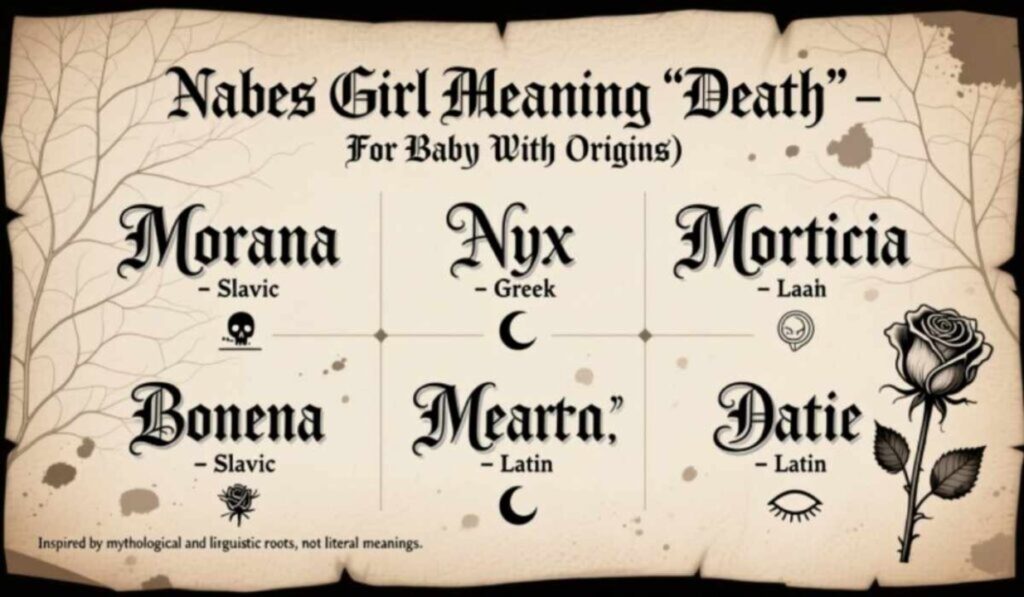
But the etymology doesn’t stop at Latin. Surnames that are more descriptive of the landscape of death are also common. Think of Graves or Sexton; the first is a direct reference to burial sites, while the second describes the caretaker of a churchyard—a person whose daily life is entwined with the resting places of the dead In other cultures, the approach can be even more direct. The Spanish surname Muertes is a stark and undeniable example, translating quite literally to “deaths” There’s a raw honesty in such naming conventions, a way of looking at the world that does not shy away from the finality of life, but rather integrates it into the very identity of a family line.
Last Names That Mean Death Born from Occupation
Often, the most straightforward last names that mean death originate from a person’s profession. In the medieval period, when many surnames were first being codified, it was common practice to name a person after their trade. If you were responsible for digging graves, preparing bodies, or carrying out sentences, you were given a name that reflected this grim duty. The surname Death itself, found in English records as early as the 14th century, is a prime example of this. It was often used as an occupational surname for undertakers, gravediggers, or even executioners There is a certain dark humor in the fact that a person responsible for arranging funerals might simply be called “Death,” as if the job had fully consumed their identity.
Other occupational names in this vein include Bourreau, a French surname meaning “executioner,” and Tornincasa, an Italian name with a more tragic origin story. This surname was given to a child who was born following the death of a previous sibling, stemming from the phrase ritorna in casa, meaning “come back home” It implies a desperate hope that the soul of the departed child had returned to the family through the new birth. There is also Posthumus, a Latin-derived surname given to a child born after the death of their father These names are more than just labels; they are historical markers of the family’s hardships, serving as a linguistic tombstone for the loved ones who were lost but not forgotten.
The Dark Allure of Mythological and Symbolic Surnames
If we move away from the purely literal or occupational, we find a treasure trove of last names that mean death through mythology and symbolism. Cultures across the world have personified death, and these deities and spirits have lent their names to our lexicon. The Greek god of death, Thanatos, provides a name that is synonymous with mortality Similarly, the name Morana, or its variation Mara, ties directly to the Slavic goddess of winter and death, a figure who represents the cold end of the year and the decay of the natural world In Hebrew and Islamic traditions, the name Azrael is well-known as the Angel of Death, and while more often a first name, it appears as a surname in some contexts, carrying with it an immense sense of divine finality
Symbolism also plays a massive role in how we perceive these death-adjacent names. Animals that are considered omens of death, like the raven and the crow, have inspired striking surnames. Raven, Crowe, and Ravencroft all connect to these black birds that have long been associated with battlefields and graveyards . A surname like Corvin also stems from this, deriving from the Latin for raven. Furthermore, surnames like Blackwood or Duskwood evoke the imagery of dark forests where the sun doesn’t reach, places of shadow that have long been linked in folklore to the realm of the dead . Even a surname like Vesper or Nocturne, meaning evening or night, connects to the darkness that precedes death
Last Names That Mean Death in the Modern World
In contemporary culture, these last names that mean death have seen a resurgence, particularly in fiction, gaming, and online identities. A character with a surname like Reaper or Graves requires little introduction; the audience instantly understands the archetype. This is why Mordrake, Nightbane, and Grimshaw are such popular choices for authors of dark fantasy and horror . There is a richness to these names that makes them instantly evocative. They tell a story before the character has even spoken, creating an aura of mystery, danger, and perhaps even tragedy. A surname like Dreaden or Ebonheart immediately suggests a character who has been touched by grief or carries a dark secret
However, it’s important to note that while names like Grimm (meaning “fierce” or “grim” in German) are often used in fiction to denote a dark character, they don’t always literally mean death Their association is built on the atmosphere they create. Furthermore, there is a movement online where users generate names for grim reaper personas or dark fantasy characters, leading to a boom in the popularity of these surnames It shows how a name from centuries past, rooted in a simple word for death or darkness, can be repurposed to fit a modern aesthetic. The name becomes a badge of honor for those who appreciate the gothic, the mysterious, and the beautiful inevitability of the end.
A Comprehensive List of Surnames and Their Meanings Last Names That Mean Death
To bring all of this together, it helps to see a curated collection of these surnames. The following list compiles some of the most compelling last names that mean death, drawn from various etymological sources. They range from the well-known to the rare, but all share that dark undercurrent.
- De la Muerte: This Spanish surname is a direct and unambiguous statement, translating to “of the death”
- Shigaraki: A Japanese surname that combines the character for “death” with other elements, creating a name with a profound meaning
- Morana / Mara: Tied to the Slavic goddess of death and winter, this name brings a sense of ancient, chilling power
- Graves: A descriptive English name for someone who lived near a burial ground or worked with them
- Morton: While historically connected to a moor settlement, its phonetic link to “mort” gives it a deathly tone
- Sexton: An English occupational surname for a church graveyard caretaker
- Bourreau: A powerful French surname meaning “executioner”
- Grimm: A German surname meaning “fierce” or “grim,” heavily associated with dark tales
- Thorne: Thorn bushes were often associated with death and mortality in older cultures
- Nerezza / Obscura: Italian and Latin roots meaning “darkness,” bringing to mind the shadow of death
- Crowe / Raven: English surnames inspired by the birds of omen
- Hades: A direct reference to the Greek god of the underworld, a very powerful choice
- Lazar: From Lazarus, associated with death and resurrection
- Thanatos: The Greek personification of death, also used as a surname
- Mortis: A Latin surname meaning “of death”
- Blackwood: English, meaning a dark forest, symbolic of the unknown and mortality
- Coffin: A direct reference to the burial container, a very literal choice
- Calvaria: Latin for “skull,” the ultimate symbol of mortality
- Ebonheart: An invented surname meaning “black-hearted,” representing sorrow
- Deathrider: A more modern invented surname, meaning “bringer of death”
- Nocturne / Vesper: French and Latin roots for “night” and “evening”
- Mordrake: Associated with fate and darkness
- Mortero / Mortera: Spanish surnames meaning “grave” or “place of death”
- Mori: From the verb “morir,” meaning “to die” in Spanish
- Tenebrae: The Latin word for “darkness,” often used in religious contexts for burial services
- Thanis: Associated with death and destiny, from Greek roots
- Darion: A name associated with darkness
- Morgrave: A combination of “dark” and “grave”
- DeMortain / DeMort: French surnames translating to “of death”
- Ebonvale: Meaning “black valley,” evoking a dark and secluded place
Finding the Right Name for Your Character
When selecting from these last names that mean death for a character, it’s essential to think about the story you want to tell. A surname like Thanatos is very on-the-nose; it signals to the audience that this character is either death itself or intimately connected to it. On the other hand, a surname like Blackwood is subtler, building an atmosphere of gothic dread without being a direct translation. It is often better to layer the meaning. If your character is a brooding, mysterious figure, a name like Mordrake or Grimshaw is perfect because it tells the reader what to expect without being too blunt.
Also, consider the historical context. If you are writing a period piece set in medieval England, a surname like Death or Sexton would be historically accurate and serve as a social indicator But if you are writing a modern fantasy novel, you might want to invent a name like Ebonheart or Nightbane to give a more fantastical, unique flair The key is to understand the weight of the name. A surname is a piece of identity, and when it is etched with the dark ink of mortality, it changes how the character is perceived. It can make them tragic, formidable, or simply a creature of the night.
Last Names That Mean Death and the Cultural Context
It’s also fascinating to look at how different cultures approach the concept of last names that mean death. In Spanish-speaking cultures, there is a tendency to be very direct, using words like Muertos or Muerte to describe death itself Last Names That Mean DeathThis reflects a cultural relationship with mortality that is often more open and integrated into daily life. Meanwhile, in Japanese surnames, the character for death (死) is often combined with other kanji to create more complex meanings, such as Shigaraki, which shows a preference for layered meaning In Scandinavia, a name like Mortensen simply means “son of Mort” (Mort meaning death), following a patronymic pattern that is common in the region
Even in the United States, the surname Death is not unknown, though it is extremely rare, with fewer than 200 occurrences Last Names That Mean Death Its history there is fascinating, with individuals bearing this name serving as clergy or military heroes, showing that the name does not dictate the person. This is perhaps the most important lesson to take from this exploration: a name is a label, not a destiny. Yet, choosing a name that brushes against the void is an act of defiance and poetic appreciation for the cycle of life. It’s a way to carry a little bit of the shadow with you, reminding us all that light cannot exist without it.
In conclusion, the world of last names that mean death is vast and varied. From the direct occupational names of medieval Europe to the mythological and symbolic names of various cultures, there is a name for every shade of darkness. Whether you are an author, a gamer, or simply someone fascinated by the macabre, these names offer a way to connect with the deepest parts of the human experience, to wrap the inevitable in mystery, and to understand that even in death, there is a story to be told. They are not just names; they are legacies, written in the language of the grave, passed down through the generations to remind us of our own fleeting time in the sun.