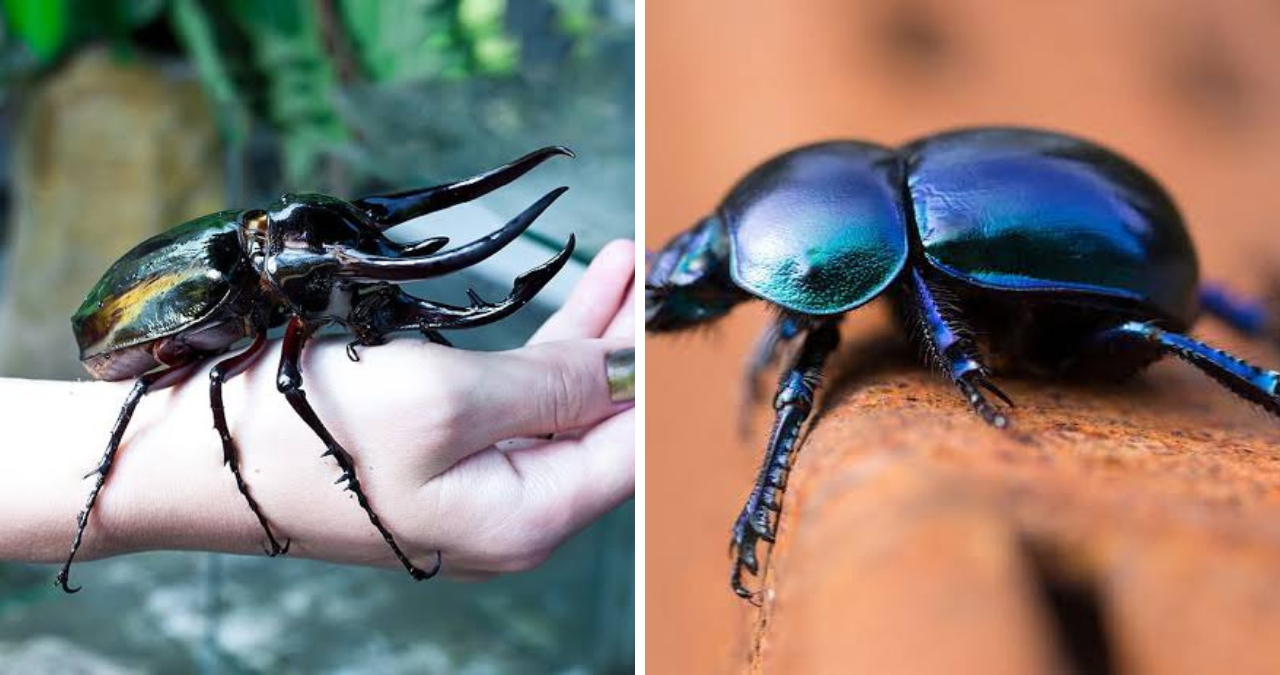
Beetle Symbolism are among the most fascinating creatures in the natural world. They can be tiny enough to overlook, brilliantly colored enough to attract immediate attention, or unusually shaped in ways that make them seem almost otherworldly. Throughout human history, people have recognized these qualities and ascribed to beetles meanings that extend far beyond their physical appearance. From ancient religious traditions to modern spiritual interpretations, beetles have often been connected with transformation, protection, renewal, persistence, mystery, and the ability to survive difficult circumstances. Understanding beetle symbolism means looking at both the natural behavior of these insects and the cultural stories people have built around them.
The symbolism becomes especially powerful when we look at the scarab beetle of ancient Egypt. The scarab was closely associated with Khepri, a deity connected with the rising sun, becoming, creation, and renewal. Ancient Egyptians observed dung beetles rolling balls across the ground and linked this behavior to the sun’s daily movement. The young beetles emerging from hidden places also contributed to ideas about rebirth and regeneration.
Today, people encounter beetles in many different contexts. Someone may discover one inside a home, notice one crossing a path, dream about one, choose a beetle tattoo, wear a scarab necklace, or simply become curious after repeatedly seeing beetles in nature. Modern interpretations are not universal rules, and a beetle does not automatically carry one predetermined message. Instead, its meaning depends on culture, species, personal circumstances, and the context in which the insect appears. That combination of ancient history and personal interpretation makes beetles particularly rich symbols.
The Core Meaning Behind Beetle Symbolism
At its heart, beetle symbolism is often associated with transformation and renewal. Beetles pass through dramatic stages of development, and many species spend important parts of their lives hidden from view. This makes them natural metaphors for change that happens quietly before becoming visible. A person may appear unchanged on the outside while experiencing significant internal development, much like a beetle progressing through an unseen stage of its life cycle.
Persistence is another major theme. Beetles are remarkably diverse and occupy an enormous range of environments. Their hard outer wing covers, called elytra, protect the more delicate wings underneath. Their physical design can therefore inspire associations with resilience, defense, and endurance. Symbolically, the beetle can represent someone who keeps moving forward despite pressure, obstacles, uncertainty, or difficult surroundings.
The idea of protection is particularly strong when beetles are represented as armored creatures. Their shell can be viewed as a metaphor for boundaries and emotional strength. This does not necessarily mean becoming cold or unreachable. Instead, the symbolism can suggest learning how to protect what matters while continuing to participate in life. A beetle’s protective exterior reminds us that strength and sensitivity can exist together.
Beetles can also symbolize resourcefulness. Many species perform ecological jobs that are easy for humans to overlook but essential to healthy environments. Dung beetles, for example, recycle organic material and help move nutrients through ecosystems. Their behavior provides a powerful metaphor for turning something overlooked or unpleasant into something useful. In a symbolic sense, the beetle can represent the ability to work with whatever circumstances are available rather than waiting for perfect conditions.
Why Beetles Became Powerful Symbols
Human beings have always created meaning from repeated observations of nature. Before modern biology explained insect development, people had to interpret what they saw with the knowledge available to them. Beetles were particularly interesting because some species disappeared underground and later appeared again, seemingly transformed. Their behavior could easily inspire stories about hidden forces, death, rebirth, creation, and renewal.
The symbolism of the scarab in ancient Egypt provides one of the clearest examples. Egyptians observed dung beetles rolling balls of dung and burying them. They also saw young beetles eventually emerge from the buried material. These observations contributed to a religious interpretation connecting the beetle with the sun and the process of renewal. The Minneapolis Institute of Art explains that scarabs became associated with the morning sun and rebirth partly because of these observed behaviors.
The beetle’s physical appearance also contributed to its symbolic power. Its rounded body, hard shell, movement across the earth, and ability to fly created an unusual combination of characteristics. It was simultaneously connected to the ground and the sky. It could burrow into hidden spaces and later emerge into the open. Symbolically, this makes the beetle a bridge between visible and invisible worlds.
Another important factor is persistence. A beetle does not generally move with the dramatic presence of a large animal. Instead, it keeps going through small, repeated actions. That makes it an excellent symbol for gradual progress. When people use beetles metaphorically, they may be expressing the idea that meaningful change does not always happen through one spectacular event. Sometimes it comes from continuing to push, adapt, rebuild, and begin again.
Beetle Symbolism in Ancient Egypt
Ancient Egypt provides the most historically documented and influential example of beetle symbolism. The scarab became deeply connected with Khepri, a divine figure associated with the rising sun and the process of coming into existence. The connection was inspired by observations of scarab behavior and the apparent emergence of young beetles from hidden places.
The Egyptian concept associated with Khepri included ideas of becoming, transformation, and coming into being. This is important because it gives the scarab a meaning that is more sophisticated than simply “good luck.” The insect represented a process: something comes into existence, changes form, disappears, and returns. That cycle made it a powerful image for renewal and regeneration.
Scarab objects were widespread in Egyptian culture. They were produced in materials such as stone, faience, ivory, and precious materials, and some functioned as seals or amulets. Archaeological and scholarly research shows that scarabs had both practical and religious uses. The University of Nebraska’s overview of scarabs in human culture notes their importance in religion, folklore, ornamentation, and other cultural practices.
The connection between the scarab and the sun was especially significant. Egyptians saw the dung beetle’s rolling behavior and related it to the movement of the sun across the sky. The result was an image of renewal that was repeated every day. Sunrise could therefore be understood as another beginning after darkness.
This historical background explains why the scarab continues to represent rebirth today. When people wear scarab jewelry or choose a scarab design for artwork, they may be drawing on a tradition that connects the insect with renewal, protection, creation, and the return of light.
Beetle Symbolism and Transformation
Transformation is one of the most natural meanings associated with beetles. Beetles undergo complete metamorphosis, meaning their development includes distinct stages rather than simply growing gradually into an adult form. The transformation can involve major physical differences between immature and mature stages.
Symbolically, this provides a useful image for personal development. A person may go through a period when change is difficult to recognize from the outside. They may be learning, recovering, developing new skills, changing relationships, or reconsidering their priorities. Like the hidden stages of an insect’s life, meaningful progress can happen before anyone else sees the result.
This interpretation is especially useful when someone feels stuck. Beetle imagery can remind a person that visible progress is not the only kind of progress. Some of the most important work happens beneath the surface. The beetle therefore becomes a symbol of patience and trust in gradual development.
Transformation also does not have to mean becoming an entirely different person. In many interpretations, it means becoming a stronger or more developed version of oneself. The beetle’s life cycle can represent adaptation rather than complete replacement. Old experiences become part of a new identity instead of simply disappearing.
For this reason, beetle imagery is often attractive to people experiencing major life transitions. A new career, move, relationship, recovery from a setback, creative project, or personal realization can all be represented through the metaphor of transformation.
Beetle Symbolism and Rebirth
Rebirth is closely connected with transformation, but it carries a slightly different emphasis. Transformation focuses on changing form, while rebirth suggests beginning again after an ending. The scarab’s ancient Egyptian associations make this particularly powerful.
The daily cycle of the sun provided ancient Egyptians with a natural image of death and renewal. Darkness did not permanently defeat the sun. Each morning brought another appearance of light. The scarab became part of this larger symbolic system of renewal and return. Modern interpretations often preserve that basic idea even when they are separated from the original religious context.
Rebirth can have many meanings in modern life. It might refer to starting over after failure, rebuilding after loss, finding confidence after a difficult period, or discovering a new direction. The symbolism does not necessarily suggest that the past should be erased. Instead, it can imply that an ending can become the foundation for another beginning.
This is one reason scarab imagery is common in jewelry, tattoos, decorative art, and spiritual designs. A small beetle can carry an enormous concept: life continues, change is possible, and a difficult chapter does not have to become the final chapter.
Beetle Symbolism and Protection
The beetle’s hard outer structure naturally encourages associations with protection. Many beetles have strong exteriors that shield vulnerable parts of their bodies. Humans have often interpreted this physical characteristic metaphorically, especially when beetle images are used in jewelry, art, or spiritual practices.
Protection does not always mean physical safety. It can also refer to emotional boundaries, personal values, privacy, and resilience. A beetle may symbolize the ability to protect one’s energy without abandoning curiosity or openness.
The ancient Egyptian scarab provides an important historical example of this protective interpretation. Scarab amulets were used in religious and funerary contexts, and their symbolic function could involve protection and assistance during transitions. Research into scarab amulets describes their protective roles in life as well as their associations with regeneration after death.
Modern people often interpret protective symbolism in a more personal way. A beetle pendant might remind someone to stay grounded. A tattoo might represent surviving a difficult period. A decorative scarab might symbolize protection during a transition. The meaning comes partly from history and partly from the intention of the person using the symbol.
The important point is that protection does not have to mean hiding forever. The beetle’s shell allows it to continue moving through the environment. Symbolically, healthy protection can work the same way: boundaries should make movement possible rather than preventing life altogether.
Beetle Symbolism and Strength
Strength is another common association. Beetles are small, yet many species are physically capable relative to their size. Their ability to push, carry, dig, climb, fly, and survive in demanding environments makes them natural symbols of determination.
The most meaningful form of strength represented by the beetle is often quiet strength. It is not the dramatic strength of a predator roaring or charging across a landscape. It is the strength of continuing a task despite resistance.
Dung beetles provide an excellent example. They may push or move material that appears disproportionately large compared with their own bodies. Their behavior has inspired admiration for persistence in several cultural contexts. Research into beetle perceptions in sub-Saharan Africa notes that dung beetles can be admired for their hard work even though their association with manure may also produce negative reactions.
This duality is important. Strength does not require looking impressive. Sometimes strength is simply doing necessary work consistently. Beetle imagery can therefore appeal to people who value discipline, persistence, patience, and practical effort.
Beetle Symbolism and Resilience
Resilience means the ability to continue functioning, adapting, or recovering after difficulty. Beetles make compelling symbols of resilience because their lives are shaped by environmental challenges.
Their hard bodies protect them, but their survival depends on more than armor. Different beetle species have adapted to forests, deserts, grasslands, wetlands, agricultural landscapes, and many other environments. Their enormous diversity demonstrates how flexible the beetle family is as a whole.
Symbolically, resilience does not mean that difficulties have no effect. A resilient person may still experience fear, grief, disappointment, or exhaustion. The symbolic lesson is that these experiences do not necessarily prevent future growth.
A beetle can therefore represent the message that survival is not always glamorous. Sometimes resilience means continuing quietly, adjusting your approach, and using available resources. It can mean finding a different route when the original route stops working.
Beetle Symbolism and Patience
Beetle Symbolism can also represent patience because many important stages of their lives happen slowly or out of sight. A beetle does not need to display its entire development to the world. Much of its existence involves processes that remain hidden.
This can be a useful metaphor for people who feel pressured to show immediate results. Modern culture often rewards visible achievement, but nature rarely works according to such a schedule. Growth can be gradual, repetitive, and difficult to measure.
The beetle reminds us that hidden work still counts. Learning, preparing, healing, saving money, practicing a skill, building a relationship, or developing an idea may produce little visible evidence at first.
Patience in this sense is not passive waiting. It is active persistence. The beetle keeps doing what it needs to do while time moves forward. That combination of patience and effort makes the symbolism especially practical.
Beetle Symbolism and Grounding
Because beetles spend so much time close to the ground, they are sometimes interpreted as symbols of grounding. This meaning is particularly common in modern spiritual and reflective interpretations.
Grounding can mean returning attention to practical reality. Instead of becoming overwhelmed by speculation, fear, or constant mental activity, a grounded person pays attention to what can actually be done.
The beetle’s relationship with soil, organic matter, plants, and the physical environment makes it an easy image for this concept. It reminds us that life is not only about ideas. Bodies need food, sleep, shelter, movement, and connection with the physical world.
In symbolic terms, seeing a beetle can therefore become a personal reminder to slow down and reconnect with ordinary life. It can represent stability, practical thinking, and respect for the physical environment.
Beetle Symbolism and Resourcefulness
Resourcefulness is one of the most interesting meanings associated with beetles. Many species use whatever resources their environments provide. They do not need ideal circumstances to fulfill their biological roles.
Dung beetles offer the clearest metaphor. What appears to humans as waste becomes a valuable resource within the beetle’s world. This does not mean every unpleasant experience in life has a hidden benefit, but it does provide a useful symbolic idea: circumstances can sometimes be transformed into resources.
Someone going through a difficult career period might interpret beetle imagery as a reminder to use existing skills differently. A person starting over might see it as encouragement to build something from what remains.
Resourcefulness also includes creativity. Instead of asking whether conditions are perfect, the beetle metaphor asks what can be done with what is already available.
Beetle Symbolism in African Cultural Contexts
It is important not to treat Africa as a single cultural tradition. The continent contains enormous linguistic, religious, and cultural diversity, and beetles have not carried one universal meaning across all African communities.
Research examining the cultural significance of beetles in sub-Saharan Africa found a wide range of attitudes. Some communities associate certain beetles with dirt, bad luck, disease, death, witchcraft, or other negative ideas, while other traditions recognize practical value, admire beetles for their work, or use beetles in ceremonies, games, ornamentation, and other activities.
This diversity is a useful warning against simplistic Beetle Symbolism. A symbol can mean one thing in one community and something completely different somewhere else. The same beetle may be admired for its hard work in one context and viewed negatively because of its association with waste in another.
That does not make symbolism unreliable. Instead, it shows that symbolism is cultural. Meaning develops through relationships between people, environments, beliefs, stories, and observed behavior.
Beetle Symbolism in Native American Traditions
Beetles appear less consistently in Native American mythology than some other animals, so claims about a single universal Native American meaning should be treated carefully. Different Indigenous nations have distinct traditions, and broad statements can easily erase important differences.
Some recorded traditions do, however, connect particular beetles with fertility, rain, environmental renewal, or other aspects of nature. Sources discussing Hopi traditions, for example, describe stories in which beetles are connected with bringing rain to dry land. Other traditions have associated certain insects with less positive ideas such as disease or supernatural danger.
The broader lesson is that beetle symbolism can emerge from ecological relationships. In a dry environment, an insect associated with rain could acquire a very different meaning from one living in a region where beetles are associated with crops or decay.
Therefore, it is better to speak of specific traditions rather than claiming that all Native American cultures view beetles in the same way. Respect for cultural context makes symbolic interpretation more accurate.
Beetle Symbolism and the Natural World
Beetles play major ecological roles, which adds another layer to their symbolic meaning. Different species can pollinate plants, break down organic material, prey on other insects, consume vegetation, recycle nutrients, or contribute to soil processes.
Their ecological importance challenges the common human tendency to divide creatures into “beautiful” and “ugly.” A beetle may not always look attractive to people, yet it can perform a function that is essential to an ecosystem.
Symbolically, this can represent hidden value. Something does not have to be beautiful, glamorous, or socially admired to matter.
This idea is especially powerful when applied to human life. People sometimes undervalue themselves because their contributions are quiet. The beetle offers a natural metaphor for meaningful work that happens without applause.
Beetle Symbolism and Death
Death is one of the more complex themes associated with beetles. The connection is especially strong in ancient Egyptian symbolism because scarabs were important in funerary contexts. However, the meaning was not simply about death as an ending. The scarab’s association with regeneration made it part of a larger concept of death followed by renewal.
This distinction matters. Symbolic death can refer to the end of an identity, relationship, habit, career, or stage of life rather than literal death.
When someone says a beetle represents death, they may actually be describing transition. Something familiar is ending, creating space for something new. This interpretation fits naturally with the beetle’s associations with transformation and rebirth.
The darker side of beetle symbolism should not automatically be considered negative. In many symbolic systems, darkness and endings are necessary parts of cycles. A forest floor, for example, depends on decomposition as part of the broader process of returning nutrients to the ecosystem.
Beetle Symbolism and Renewal After Hardship
One of the strongest modern interpretations of beetles is the idea of rebuilding after difficulty. This interpretation combines several characteristics: transformation, persistence, protection, resourcefulness, and renewal.
A beetle does not need to erase its environment before moving forward. It works within the world as it exists. That makes it a useful symbol for recovery that is realistic rather than idealized.
Renewal does not mean pretending that painful experiences never happened. Instead, it can mean learning how to carry the past differently. What happened remains part of the story, but it no longer controls the entire direction of the future.
This interpretation can make beetle imagery particularly meaningful for people marking a personal milestone. A scarab necklace, drawing, tattoo, or small object may serve as a private reminder that difficult periods can be followed by new beginnings.
Beetle Symbolism in Dreams
Dream interpretations involving beetles are highly subjective. There is no scientific rule stating that seeing a beetle in a dream always means a particular thing. Dreams are influenced by personal memories, emotions, experiences, culture, and current concerns.
Still, beetles can provide useful symbolic material for reflection. A beetle appearing during a period of major change might remind the dreamer of transformation. A beetle hiding under something could suggest thoughts or issues that have not yet become visible. A brightly colored beetle could draw attention to beauty, individuality, or something unexpected.
The emotional response in the dream is often more informative than the insect itself. If the beetle creates fear, disgust, curiosity, admiration, or fascination, that emotional reaction may offer clues about what the image represents personally.
Dream symbolism works best as a reflective tool rather than a prediction system. Instead of assuming that a beetle guarantees a future event, it can be more useful to ask what qualities the creature brings to mind and how those qualities relate to current life circumstances.
What It Means to See a Beetle
Seeing a beetle in everyday life does not necessarily carry a supernatural message. Sometimes a beetle is simply a beetle. Weather, food, vegetation, light, shelter, and seasonal conditions all influence where insects appear.
However, people naturally attach meaning to memorable encounters. If someone repeatedly notices beetles during a period of personal change, the insect may become a meaningful personal symbol.
A useful interpretation might focus on qualities rather than predictions. The beetle can invite reflection on persistence, protection, adaptability, patience, transformation, or renewal.
The context matters. A beetle appearing during a peaceful walk may feel different from one appearing during a stressful situation. The meaning is shaped by the observer’s relationship with the moment.
Black Beetle Symbolism
Black beetles can carry strong symbolic associations because black is often connected with mystery, depth, protection, seriousness, and the unknown. These meanings are cultural rather than biological rules.
A black beetle may therefore be interpreted as a symbol of inner strength or hidden transformation. Its dark appearance can represent something that is developing outside immediate awareness.
In some traditions, dark insects may also be associated with death, bad luck, fear, or supernatural forces. These interpretations demonstrate again that symbolism can have both positive and negative dimensions.
A balanced interpretation does not assume that a black beetle automatically represents something bad. Instead, it considers the surrounding context and the observer’s emotional response.
Green Beetle Symbolism
Green beetles are often associated in modern symbolic language with growth, renewal, nature, prosperity, and healing. The connection is largely based on the cultural associations of the color green rather than a universal meaning assigned to green beetles themselves.
The natural world strengthens this interpretation. Green is closely connected with leaves, vegetation, spring, and new growth. A metallic green beetle can therefore seem especially connected with vitality.
Green beetles can also remind us that beauty exists in unexpected places. Some species have extraordinary iridescent colors created by physical structures that reflect light in complex ways.
Symbolically, that visual quality can represent individuality. The beetle does not need to resemble a butterfly to be beautiful. It can possess its own distinctive form of attractiveness.
Metallic Beetle Symbolism
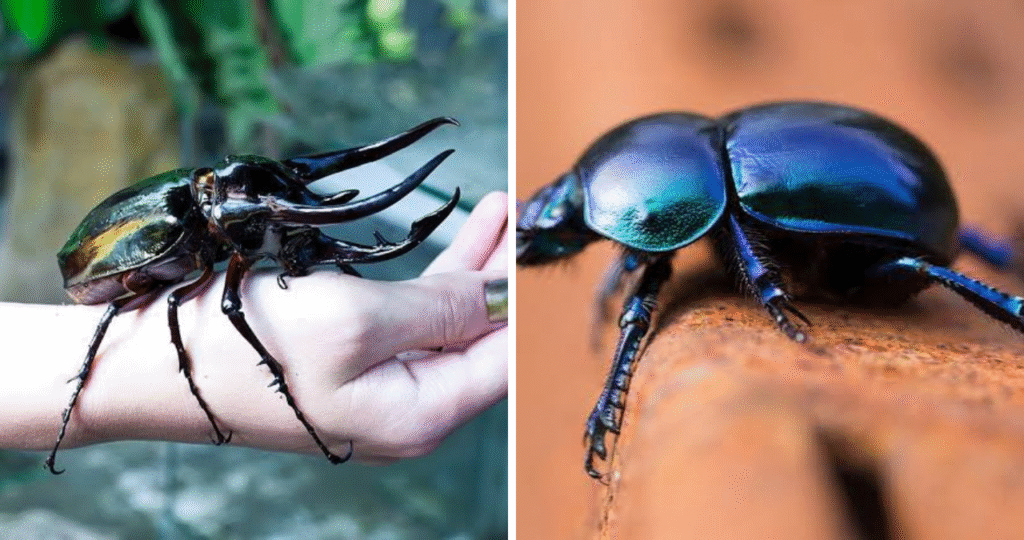
Metallic beetles are particularly striking because their shells can appear blue, green, bronze, gold, or other shimmering shades. This appearance often inspires associations with rarity, value, mystery, and hidden beauty.
The symbolism can be understood as a reminder that appearance is not always simple. A beetle may look completely different depending on the angle of light.
That makes the metallic beetle a useful metaphor for perspective. Something can seem ordinary from one direction and extraordinary from another. People and experiences can work the same way.
This interpretation encourages curiosity. Instead of judging something immediately, it suggests taking another look.
Scarab Symbolism in Jewelry
Scarab jewelry remains popular because it combines recognizable historical imagery with a compact symbolic form. A small scarab can represent renewal, protection, transformation, or connection with ancient Egyptian culture.
Historically, scarab-shaped objects were not merely decorative. They could function as seals and amulets and could carry religious or personal significance. Their widespread archaeological presence demonstrates how deeply the image became embedded in Egyptian material culture.
Modern jewelry does not necessarily reproduce the original meaning exactly. Someone wearing a scarab pendant might value the design for its beauty, historical associations, personal symbolism, or connection with a new beginning.
The important distinction is between historical meaning and modern interpretation. Knowing the original context makes contemporary use more informed and respectful.
Beetle Symbolism in Tattoos
Beetle tattoos can represent many ideas, depending on the species and design. A scarab is commonly chosen for associations with rebirth, renewal, protection, and ancient Egyptian history.
Other beetle designs can emphasize resilience, nature, individuality, transformation, or appreciation for the small details of the natural world.
A beetle tattoo can also symbolize personal survival. Someone may choose the image because they have experienced a difficult period and want a permanent reminder of their ability to continue.
The meaning can become more specific through additional elements. Sun imagery may strengthen themes of renewal. Plants can emphasize nature and growth. Wings can suggest freedom or transformation. Geometric patterns can create a more modern interpretation.
Beetle Symbolism in Art and Literature
Artists have long used insects to explore ideas that are difficult to express directly. Beetles can represent decay, beauty, persistence, transformation, or the contrast between the tiny and the enormous.
Their unusual bodies make them visually useful. A beetle can be realistic, decorative, surreal, frightening, elegant, or humorous depending on how an artist presents it.
In literature, insects can also function as metaphors for human behavior. A beetle’s persistence may represent determination. Its small size can emphasize vulnerability. Its shell can symbolize emotional defenses. Its underground life can represent hidden thoughts.
Because beetles carry both attractive and unsettling qualities, they are particularly useful for exploring contradictions.
Beetle Symbolism and Personal Growth
Personal growth is rarely a straight path. People change through experience, mistakes, relationships, setbacks, learning, and time. Beetle imagery fits this process because the creature’s life cycle naturally suggests development through different forms.
The symbolism can encourage people to stop expecting immediate perfection. A developing person does not need to look finished while growth is taking place.
This is particularly relevant when someone compares their progress with others. The beetle does not become more valuable by copying another insect. Its strength comes from being adapted to its own role.
The same principle can apply to human development. Personal growth is not about becoming someone else. It is about developing the abilities, values, and resilience needed for one’s own circumstances.
Beetle Symbolism and Inner Strength
Inner strength is often quieter than external confidence. A person can feel uncertain and continue. They can experience fear and still act. They can fail and still rebuild.
The beetle is a fitting symbol because its small size does not prevent it from performing demanding tasks. It does not need to appear powerful to persist.
This symbolism can be particularly meaningful for people who do not identify with traditional images of strength. Strength can be patience, consistency, adaptability, boundaries, or the willingness to begin again.
The beetle therefore represents a form of strength that is practical rather than theatrical.
Beetle Symbolism and Hidden Potential
Because beetles spend parts of their development out of sight, they can symbolize potential that has not yet become visible. This idea resonates with many aspects of human life.
A skill may exist before anyone recognizes it. An idea may develop privately before becoming a successful project. A person’s confidence may grow quietly before it becomes obvious.
Hidden potential does not guarantee success. The symbolism is better understood as encouragement to respect processes that take time.
The beetle reminds us that the visible adult is not the entire story. What appears suddenly often has a long hidden history behind it.
Beetle Symbolism and Letting Go
Dung beetles provide an unusual but powerful metaphor for letting go. Their world involves material that humans often regard as waste, yet they interact with it as part of a functional ecological system.
Symbolically, this can represent changing one’s relationship with the past. Letting go does not always mean pretending something had no value. It can mean recognizing that its role has changed.
A failed experience may eventually become a lesson. An ending relationship may reveal personal boundaries. A difficult period may clarify priorities.
The beetle does not romanticize waste. It simply demonstrates that nature continually transforms materials into new forms and uses.
The Positive Side of Beetle Symbolism
The positive meanings associated with beetles include resilience, transformation, persistence, protection, renewal, adaptability, patience, resourcefulness, and personal growth.
These meanings work because they connect symbolic ideas with observable characteristics. Beetles really do have protective structures. They really do undergo metamorphosis. Many species really do perform important ecological functions.
This makes the symbolism feel grounded rather than completely invented.
The strongest symbolic interpretations usually begin with something real and then develop metaphorically from it.
The Shadow Side of Beetle Symbolism
Not every beetle interpretation is positive. In different cultures and contexts, beetles can be associated with dirt, disease, death, misfortune, witchcraft, or unpleasant environments. Research on sub-Saharan African cultural perceptions demonstrates this complexity clearly.
The shadow side of beetle symbolism can represent fear of decay, hidden problems, unwanted change, or things people would rather avoid. This does not necessarily make the symbolism negative. It can instead point toward uncomfortable truths.
A symbol becomes more useful when it can hold contradictions. The beetle can represent both decay and renewal, darkness and rebirth, protection and isolation, persistence and stubbornness.
That complexity is part of what makes beetle imagery so enduring.
Why Beetle Symbolism Still Matters Today
Modern life is very different from ancient Egypt, yet people continue to search for meaning in natural images. Part of the reason is simple: nature provides metaphors that remain understandable even when cultures change.
Everyone experiences change. Everyone encounters setbacks. Everyone needs some form of protection. Everyone eventually has to adapt.
The beetle’s symbolism speaks to these universal experiences without requiring one specific religious belief. Someone can appreciate the scarab’s Egyptian history while also finding a personal meaning in its transformation and resilience.
This flexibility allows beetle imagery to remain relevant in jewelry, tattoos, art, fashion, storytelling, spirituality, and personal reflection.
How to Interpret Beetle Symbolism Responsibly
The most responsible approach is to avoid claiming that every beetle encounter has a fixed supernatural meaning. Symbolism is shaped by context, culture, history, and personal experience.
It is also important to distinguish documented historical traditions from modern spiritual interpretations. The scarab’s association with Khepri and ancient Egyptian renewal has strong historical evidence. Modern claims about seeing a particular beetle as a guaranteed sign of a specific future event are much more interpretive.
This distinction does not make personal symbolism meaningless. Personal meaning can be valuable without being presented as objective fact.
A thoughtful interpretation asks what the beetle represents within the relevant cultural tradition and what it means personally to the observer.
Beetle Symbolism as a Reminder of Adaptation
Adaptation may be one of the most practical lessons connected with beetles. Life rarely remains stable forever. Environments change, relationships change, careers change, bodies change, and priorities change.
Adaptation does not mean abandoning identity. It means finding ways to continue functioning when circumstances are different.
Beetles provide countless natural examples of species adapted to particular ecological niches. Their diversity demonstrates that survival can take many forms.
Symbolically, this suggests that there may not be one correct way to move through change. What matters is learning what the current environment requires.
Beetle Symbolism and Quiet Persistence
Some symbols are powerful because they represent dramatic moments. The beetle is powerful for almost the opposite reason.
Its symbolism often centers on repeated action. Move the material. Find shelter. Continue developing. Protect the body. Search for food. Reproduce. Adapt.
This is not glamorous, but it is effective.
For human beings, quiet persistence can be more valuable than occasional bursts of motivation. A small amount of useful effort repeated consistently can eventually produce major results.
The beetle therefore represents the dignity of ordinary work.
Beetle Symbolism and the Cycle of Life
The beetle’s relationship with soil, organic material, reproduction, development, and ecological recycling connects it with broader cycles of life.
Nature does not operate through simple beginnings and endings. Materials move from one form to another. Plants grow, die, decompose, and contribute nutrients to future growth.
The scarab’s ancient symbolism expressed a similar fascination with cycles, particularly the daily renewal of the sun. Modern interpretations can expand that idea to include personal and ecological cycles.
Seeing life as cyclical can change how we understand endings. An ending may still be painful, but it does not necessarily mean that everything stops.
Beetle Symbolism and the Meaning of Small Things
One of the most valuable lessons from beetles is that size does not determine significance.
A beetle can be tiny and still influence its environment. It can perform ecological work that humans may barely notice. It can become the central image of an ancient religious tradition.
This makes the beetle a useful symbol for underestimated potential.
Small actions can matter. Quiet contributions can matter. A person does not have to occupy a large space to have meaningful influence.
Beetle Symbolism in Modern Spirituality
Modern spiritual interpretations often connect beetles with change, protection, grounding, rebirth, persistence, and messages from nature. These interpretations vary widely and should be understood as personal or spiritual frameworks rather than established scientific facts.
For some people, noticing a beetle during a significant moment creates a feeling of connection. The insect becomes a reminder to pay attention to change or remain persistent.
This can be psychologically meaningful even without assuming supernatural causation. Symbols help people organize experiences and express emotions that may otherwise be difficult to describe.
The value of a symbol can therefore come from reflection rather than prediction.
What a Beetle Can Teach About Difficult Times
During difficult periods, people often want immediate answers. Beetle imagery offers a different lesson: keep working with what is available.
The beetle does not require perfect conditions before taking action. It adapts to its environment and continues performing the tasks necessary for survival.
This can become a useful personal metaphor. When everything cannot be fixed at once, focus on the next practical step.
The beetle’s message, in symbolic terms, is not that difficulty is easy. It is that difficulty does not automatically eliminate the possibility of movement.
Beetle Symbolism and New Beginnings
New beginnings are often associated with optimism, but real beginnings can also be uncomfortable. Starting again may involve uncertainty, financial pressure, emotional risk, or fear of failure.
The scarab’s symbolism makes renewal more realistic because its association with rebirth is connected to cycles rather than permanent perfection.
A new beginning does not mean every problem disappears. It means another stage becomes possible.
That is why beetle imagery can be especially meaningful at turning points. It can symbolize the decision to move forward even when the path is not completely clear.
Beetle Symbolism and Self-Protection Without Isolation
The beetle’s shell provides an interesting lesson about boundaries. Protection is necessary, but permanent isolation is not the same thing as safety.
A beetle uses its protective structure while still moving through the environment. Symbolically, this suggests that healthy boundaries should support participation rather than prevent it.
For people who have experienced disappointment, it can be tempting to become completely closed off. Beetle imagery offers a more balanced metaphor: protect yourself, but keep moving.
Strength does not require removing every vulnerability. It means knowing how to manage vulnerability wisely.
Beetle Symbolism and the Beauty of the Unusual
Beetles challenge traditional ideas about beauty. Some are covered in brilliant metallic colors. Others have unusual horns, patterns, textures, or body shapes.
Their beauty often becomes apparent only when someone takes the time to look closely.
This creates a powerful symbolic message about individuality. Something does not have to resemble conventional beauty to be valuable.
In art and personal symbolism, beetles can therefore represent originality, unconventional identity, and appreciation for overlooked forms of beauty.
Beetle Symbolism and Nature-Based Reflection
A beetle encounter can be used as a simple invitation to observe the natural world. Instead of immediately assigning a mystical explanation, someone can first notice the insect’s behavior.
Where is it going? What is it interacting with? What is the environment like? Why might it be there?
This approach combines symbolism with curiosity.
Nature becomes more meaningful when observation comes before assumption. The beetle can inspire reflection without requiring exaggerated claims.
The Historical Legacy of the Scarab
The scarab’s legacy is unusually strong because it was not merely an isolated decorative motif. It appeared across religious, funerary, artistic, and administrative contexts in ancient Egypt.
Archaeological evidence includes scarabs made from multiple materials and used over long periods. Some served as seals, while others had amuletic or symbolic functions. Their widespread presence demonstrates how deeply the image became embedded in Egyptian culture.
The continued popularity of scarab imagery today is therefore connected to a genuine historical tradition rather than a purely modern invention.
At the same time, modern interpretations should not be confused with ancient beliefs. Contemporary spirituality often adds meanings that were not necessarily part of the original Egyptian system.
Beetle Symbolism Compared With Other Insect Symbols
Beetles share some symbolic themes with other insects, particularly transformation and life cycles. Butterflies, for example, are commonly associated with change because of their metamorphosis.
The beetle differs because its symbolism often includes protection, persistence, grounding, and regeneration. Its hard exterior creates a very different metaphor from the delicate wings of a butterfly.
Beetle symbolism can therefore feel more earthy and practical. It is less about graceful transformation and more about surviving the process of transformation.
That distinction explains why some people connect more strongly with beetle imagery than with other insect symbols.
Why the Beetle Is a Powerful Personal Symbol
A personal symbol becomes meaningful when it reflects something the individual values or has experienced. Beetles offer a wide range of possible meanings without forcing one interpretation.
Someone who has rebuilt their life may connect with renewal. Someone who has survived hardship may identify with resilience. Someone beginning a new chapter may see transformation. Someone learning boundaries may appreciate the protective shell.
The same creature can therefore represent different experiences for different people.
That flexibility is not a weakness. It is one of the main reasons symbolic language remains useful.
Common Misunderstandings About Beetle Symbolism
One common misunderstanding is that every beetle species has the same meaning. In reality, beetles are an enormous and diverse group, and cultural associations vary.
Another misunderstanding is that seeing a beetle always predicts something. There is no scientific basis for treating ordinary beetle encounters as guaranteed predictions of future events.
A third misunderstanding is that ancient Egyptian scarab symbolism represents every beetle in every culture. The scarab tradition is historically important, but it should not be projected onto all societies.
Better interpretation comes from distinguishing biology, history, cultural tradition, and personal meaning.
The Deeper Meaning of Beetle Symbolism
At its deepest level, beetle symbolism can be understood as a story about persistence through change.
The beetle lives close to the ground, works with available resources, protects itself, develops through hidden stages, and participates in cycles of nature. These characteristics provide a remarkable collection of metaphors for human life.
The scarab adds another dimension by connecting the beetle with ancient ideas about the rising sun, creation, renewal, and rebirth. Historical evidence makes the Egyptian example particularly significant.
Yet the meaning does not stop in antiquity. Modern people continue to use beetle imagery because its central themes remain recognizable.
We all face periods when something must end before something else can begin. We all need resilience. We all need boundaries. We all encounter situations where we have to adapt.
The beetle provides a compact natural image for all of these experiences.
Final Thoughts on Beetle Symbolism
Beetle symbolism is much richer than the simple idea that a beetle represents good luck. Its meanings have developed through natural observation, cultural history, mythology, religion, art, and personal interpretation. Across these different contexts, recurring themes include transformation, renewal, persistence, protection, resilience, grounding, resourcefulness, and the cycles of life.
The ancient Egyptian scarab remains the strongest historical example. Its association with Khepri and the rising sun helped establish the beetle as an image of coming into existence, renewal, and regeneration. Scarab amulets and other objects demonstrate how deeply this imagery became integrated into Egyptian religious and cultural life.
But beetle symbolism should never be treated as one fixed definition. Different cultures have interpreted beetles in different ways, including positive, negative, practical, spiritual, and ecological meanings. Research into beetle traditions in sub-Saharan Africa, for example, shows considerable diversity rather than one universal interpretation.
For modern readers, perhaps the most useful interpretation is the simplest one: the beetle represents the ability to keep going through change. It reminds us that transformation can happen quietly, that protection can coexist with movement, and that something overlooked can still have tremendous value.
A beetle may be small, but its symbolic history is enormous. From the ancient scarab connected with the rising sun to the ordinary beetle moving across a garden path, this creature continues to invite us to think about renewal, endurance, hidden potential, and the remarkable ability of life to keep changing.
Unlocking the Power of Info DigitalNewsAlerts: Your Ultimate Guide to Real-Time News